There is a particular kind of exhaustion that comes from living with your attention everywhere except where you are.
You can have a full day, accomplish everything on your list, answer every message, attend every meeting, take care of everyone around you, and still arrive at the end of the day wondering where you actually were.
The body was here.
But were you here?
I have been thinking about this question for years, although I did not always have the language for it.
One of the earliest ways I encountered it was through something my former boss used to say to the staff, especially the men working in the warehouse.
“You are walking around this place like headless ducks.”
It became almost his chant.
At the time, it was simply his way of telling people to pay attention. Look where you are going. Notice what you are doing. Come back to the work in front of you.
But years later, I hear something much deeper in it.
He was noticing what happens when the body is moving but awareness is elsewhere.
The men were physically there. They were walking, working, carrying things, completing tasks. But perhaps they were not fully there. Their attention had become dispersed. They were operating without enough contact with the moment.
And isn’t this something most of us know?
We wake up and immediately reach for our phones.
We eat while thinking about work.
We speak to someone while preparing our response.
We walk through beautiful places without seeing them.
We sit beside people we love while worrying about something that has not happened yet.
We arrive in one moment carrying the unfinished business of ten others.
And then we wonder why life feels as though it is moving so quickly.
Perhaps life isn’t moving too quickly.
Perhaps we are simply rarely here to experience it.
Where is your attention?
There is something I have been contemplating more deeply:
attention is one of the most intimate ways we participate in reality.
What we repeatedly attend to becomes familiar.
What becomes familiar begins to feel important.
What feels important receives more attention.
And what receives our attention begins to shape the texture of our experience.
This is not to say that attention magically controls reality or that we can think our way out of difficult circumstances.
It is something subtler.
Our attention determines, in part, what we are available to perceive.
And perception changes the way we move through the world.
If I spend my day looking for what is wrong, I become extraordinarily skilled at finding what is wrong.
If I spend my day anticipating rejection, I become sensitive to every small sign that confirms it.
If I am constantly scanning for danger, neutral situations can begin to feel threatening.
If I am constantly looking for what is missing, abundance can become almost invisible.
And if I begin practicing the recognition of beauty, I may start seeing beauty in places I previously overlooked.
This is one of the quiet powers of awareness.
It changes what becomes visible.
The nervous system remains elsewhere
Worry is an interesting example.
Most worry is not happening in the present moment.
It is attention rehearsing an imagined future.
What if this happens?
What if that goes wrong?
What if I don’t have enough?
What if they leave?
What if I fail?
What if something happens to the people I love?
The body may be sitting safely in a room while the mind is living inside a future that does not yet exist.
And because attention is elsewhere, life never fully arrives.
This is where I have come to understand presence differently.
Presence isn’t simply sitting quietly and trying to empty the mind.
Presence is returning.
Returning to the body.
Returning to sensation.
Returning to the room.
Returning to the person in front of you.
Returning to the breath.
Returning to what is actually happening rather than continuously living inside what might happen.
The nervous system cannot receive what awareness refuses to inhabit.
And so sometimes the most spiritual thing we can do is remarkably ordinary:
come back.
Scarcity begins as a way of looking
One of the deepest things I have come to understand through my own relationship with money, family, and culture is that scarcity is not only an economic condition.
It can become a way of perceiving.
You can have enough and still experience lack.
You can be loved and still anticipate abandonment.
You can be financially secure and still feel that everything is about to disappear.
You can have a beautiful home and still be afraid to use what you own.
I have watched this in my own family.
My grandmother can be completely taken care of—her meals prepared, her bills paid, her needs met—and still worry about the refrigerator running too long.
She worries about the electricity.
She worries about the air conditioning.
She worries about the cost of gasoline when someone offers to take her for a drive.
There is a history underneath this.
Her family came through the experience of Indian indentureship, a system shaped by survival, displacement, labour, and economic scarcity.
The circumstances changed.
But sometimes the orientation remains.
The body can remember a world that the present moment no longer resembles.
And this is why I have become interested in the relationship between awareness and sensation.
Because scarcity is often a sensation before it becomes a belief.
A tightening.
A contraction.
A feeling that there isn’t enough.
A compulsion to hold on.
A nervousness about spending.
A difficulty receiving.
A need to secure the future before allowing yourself to inhabit the present.
And perhaps abundance has a sensation too.
Space.
Ease.
Generosity.
Possibility.
Enoughness.
The ability to receive without immediately wondering when it will disappear.
This is why presence matters to Sacred Economy.
Wealth is not only what circulates through your life.
It is also your capacity to experience the circulation.
What have you trained yourself to feel?
There is a question I now find more interesting than:
What do I want?
It is:
What sensations have I trained myself to call normal?
Perhaps you have become accustomed to urgency.
Perhaps anxiety feels like responsibility.
Perhaps overworking feels like worthiness.
Perhaps exhaustion feels like accomplishment.
Perhaps emotional distance feels like safety.
Perhaps control feels like peace.
Perhaps scarcity feels so familiar that spaciousness initially feels uncomfortable.
This is important because we don’t only create through our thoughts.
We create through the states from which we perceive, choose, relate, and act.
And this is where the body becomes part of the conversation.
Not as a machine we need to control.
But as a place of knowing.
Can I notice contraction without immediately creating a story around it?
Can I feel fear without deciding that fear means something is wrong?
Can I experience expansion without immediately grasping for more?
Can I stay with beauty long enough to actually receive it?
Can I allow myself to experience enoughness before I start searching for what is next?
The body can learn what enough feels like.
And perhaps this is part of what it means to live as awareness.
The quiet luxury of paying attention
There is a kind of luxury that cannot be purchased.
It is the ability to actually be where you are.
To eat your food and taste it.
To walk outside and notice the trees.
To listen when someone is speaking.
To feel the warmth of sunlight on your skin.
To notice the fragrance of a flower.
To experience music without simultaneously reaching for your phone.
To watch someone you love and realize:
I am here.
This is why I think of attention as a form of wealth.
Because attention is finite.
Where you place it is one of the most consequential choices you make every day.
And yet our culture is built around capturing it.
Advertising wants it.
Social media wants it.
News wants it.
Algorithms want it.
Other people’s expectations want it.
Our unfinished conversations want it.
Our fears want it.
Our fantasies want it.
Everyone is asking:
Look here.
And very few of us stop to ask:
Where do I actually want to look?
The economy of distraction
I used to think distraction was simply a lack of discipline.
Now I see it differently.
Sometimes distraction is a way of avoiding experience.
If I am uncomfortable with what I am feeling, I can scroll.
If I am lonely, I can shop.
If I am anxious, I can consume.
If I am uncertain, I can fill the silence with information.
If I don’t know what I want, I can look at what everyone else wants.
And suddenly I am surrounded by things.
More clothes.
More information.
More entertainment.
More goals.
More purchases.
More content.
More noise.
And somehow, less contact with myself.
This is where worry and consumerism can become intertwined.
When we experience lack internally, we may attempt to resolve it externally.
We buy something.
We achieve something.
We change something.
We acquire something.
And for a moment, there is relief.
But if the underlying experience of lack remains untouched, we soon need another thing.
The object was never really the object.
We were searching for a feeling.
Safety.
Belonging.
Beauty.
Recognition.
Enoughness.
Rest.
Love.
Freedom.
Sometimes we don’t want the thing.
We want the feeling we imagine the thing will give us.
And this is why awareness can become an economic practice.
Because before asking:
What should I buy?
we can ask:
What am I actually longing to feel?
A pause
This is why I have come to love the pause.
Not because the pause makes us passive.
But because it gives awareness enough space to notice what is actually happening.
A pause can interrupt an automatic pattern.
Before I respond, I pause.
Before I purchase, I pause.
Before I say yes, I pause.
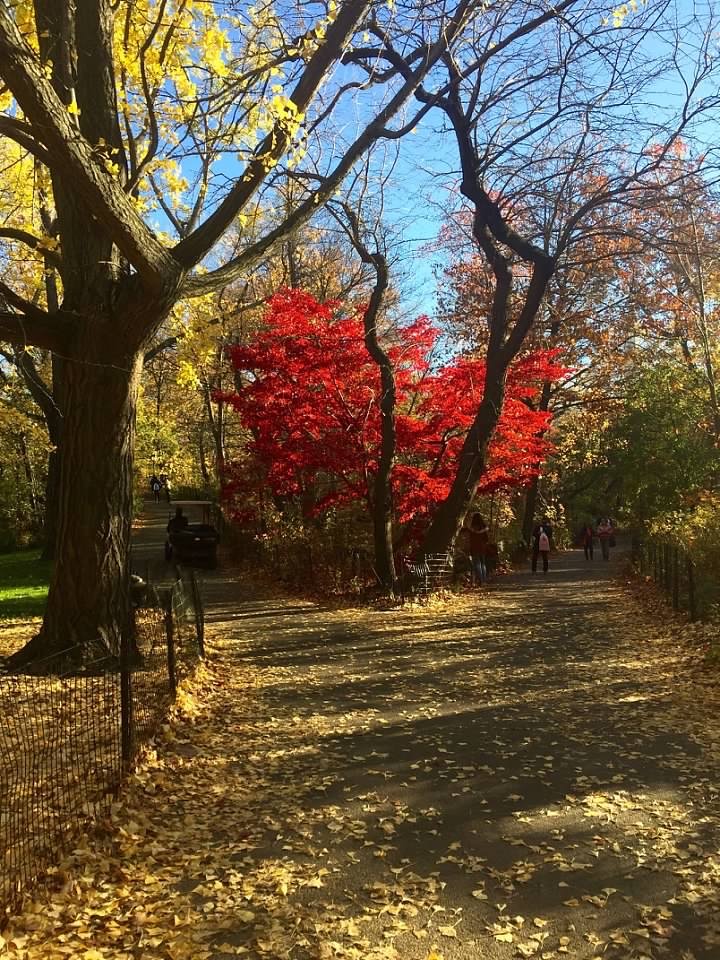
Before I send the message, I pause.
Before I decide that something is wrong, I pause.
Before I reach for the next thing, I pause.
And suddenly there is a little more space between sensation and story.
Between impulse and action.
Between conditioning and choice.
This is where mindfulness becomes much more interesting to me.
It is not merely about calming the mind.
It is about reclaiming the authority of attention.
You aren’t just meditating.
You are resetting your consciousness to match the very blueprint of creation.
You are remembering what it feels like to be here.
Attention given shape
Growing up, ritual was part of everyday life.
We would wake up, bathe, and go to the altar.
There might be water.
A flower.
Fruit.
A candle.
A prayer.
A mantra.
During summer holidays, I remember watching my nani spend hours at the altar.
As a child, I didn’t have language for what I was witnessing.
I simply knew there was something beautiful about it.
Today I understand ritual differently.
Perhaps ritual is not about persuading the universe to give us something.
Perhaps ritual is one of the oldest ways human beings have learned to teach attention what is sacred.
A flower can do that.
A photograph can do that.
A mantra can do that.
Music can do that.
An altar can do that.
A walk can do that.
A morning question can do that.
These things give attention a place to land.
They make the invisible visible.
They turn an intention into an environment.
Attention given shape becomes ritual.
And ritual, repeated over time, becomes a way of inhabiting life.
Intention is not control
I used to think intention meant deciding exactly what I wanted and then trying to make reality conform to it.
I understand it differently now.
Intention is not controlling reality.
It is giving attention a direction.
It is asking:
What matters to me?
What am I available for?
What quality of experience do I want to cultivate?
What is my heart actually longing for beneath the goals I have inherited?
This distinction matters.
Because many of our goals are not really ours.
They come from comparison.
Family.
Culture.
Advertising.
Status.
Fear.
The desire to be accepted.
The desire to prove ourselves.
We can spend years achieving things that never actually nourish us.
And then one day we discover that the deepest longing was never the achievement.
It was the experience underneath it.
Love.
Contribution.
Freedom.
Beauty.
Belonging.
Purpose.
Peace.
Let yourself be moved
There is another form of attention I have been learning to trust.
Being moved.
Not everything meaningful arrives as a plan.
Sometimes it arrives as a sensation.
A sudden curiosity.
A sentence that stays with you.
A song.
A dream.
A person.
A flower.
A book.
A memory.
A strange idea that keeps returning.
A quiet pull toward something you cannot yet explain.
This is why I have become less interested in forcing purpose and more interested in becoming available to it.
Perhaps purpose is not something we discover once and then execute.
Perhaps purpose is revealed through our relationship with now.
Life is your relationship with now.
And when you become intimate enough with what is here, something begins to move through you.
An idea.
A conversation.
A creation.
A contribution.
A decision.
A new way of seeing.
This is where beauty becomes more than something pleasant to look at.
Beauty becomes a form of intelligence.
It teaches us what we are available to perceive.
It opens us.
It slows us down.
It reminds us that existence is not merely something to manage.
It is something to participate in.
Receiving by being
For a long time, I thought creation required effort.
More discipline.
More strategy.
More pushing.
More doing.
But some of my deepest creative insights have arrived when I was doing almost nothing.
Sitting quietly.
Walking.
Watching trees.
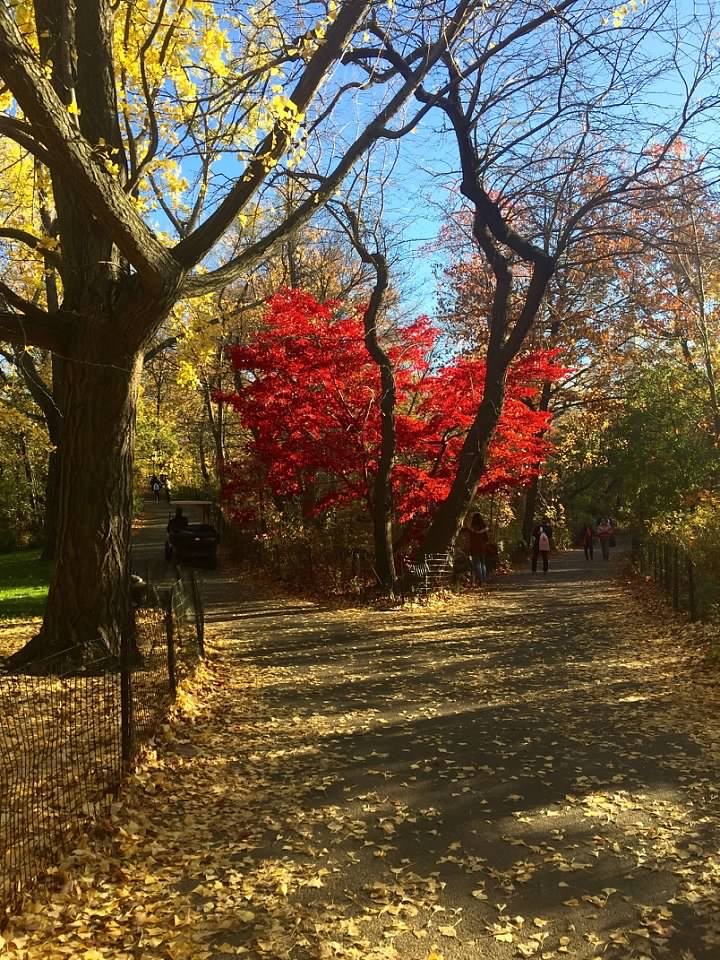
Listening.
Dreaming.
Praying.
Letting an experience remain unresolved.
There was a period in my own life when I spent long stretches in silence.
I would sit outside and look at the papaya and coconut trees.
I began noticing things I had previously overlooked.
The movement of leaves.
The light.
The presence of neighbours.
The ordinary beauty of family.
The feeling of being alive.
And something changed.
I wasn’t trying to create.
I was becoming available.
And from that availability, ideas began to arrive.
Sacred Economy itself emerged from that kind of listening.
Before I could explain it intellectually, my body recognized something.
There was ease.
A sense of:
Yes.
This is why I say:
I receive by being.
Because sometimes the most creative thing we can do is stop trying to extract something from life and become available to what life is already offering.
Awareness always leaves fingerprints
Look at the life around you.
What does your attention keep touching?
What conversations do you repeatedly find yourself having?
What kinds of beauty do you notice?
What problems are you naturally drawn to solve?
What makes you angry?
What makes you curious?
What makes you soften?
What makes you come alive?
What keeps returning?
There are clues everywhere.
Awareness always leaves fingerprints.
Not because everything that happens is a mystical message.
But because what we consistently attend to reveals something about what matters to us.
And when we begin to notice those patterns without forcing them into a story, we can start to recognize the shape of our own consciousness.
This is one of the reasons I believe self-knowledge is such sacred work.
Know thyself.
Not as an intellectual exercise.
As a lived practice.
Know what expansion feels like.
Know what contraction feels like.
Know what beauty feels like.
Know what enoughness feels like.
Know what fear feels like.
Know what belonging feels like.
Know what receiving feels like.
Know what it feels like when you are abandoning yourself.
Know what it feels like when you return.
This is intelligence too.
Not intellectual intelligence alone.
But relational intelligence.
Embodied intelligence.
Aesthetic intelligence.
Perceptual intelligence.
Spiritual intelligence.
Nervous-system intelligence.
The intelligence of knowing what it feels like to be alive.
The practice of returning
Perhaps living as awareness is not about becoming permanently present.
That may be another form of perfectionism.
We will wander.
We will worry.
We will get distracted.
We will lose ourselves in the future.
We will become consumed by the past.
We will scroll.
We will overwork.
We will forget.
The practice is not to never leave.
The practice is to notice.
And return.
Again.
And again.
And again.
Return to the breath.
Return to sensation.
Return to beauty.
Return to the person in front of you.
Return to your values.
Return to your body.
Return to the altar.
Return to the question.
Return to the moment.
Because every return is a small act of self-trust.
What are you rehearsing?
So perhaps the quiet luxury of paying attention is not simply that we notice more.
Perhaps it is that we begin to understand what our attention has been creating all along.
What have you been rehearsing?
What have you been looking for?
What has your nervous system learned to anticipate?
What have you decided is missing?
What sensations have you normalized?
Where does your attention go when you have nothing to distract you?
What happens when you experience beauty?
Do you let yourself receive it?
Or do you immediately move on?
What happens when life gives you more than you expected?
Can you stay?
Can you receive?
Can you let yourself be moved?
Can you experience expansion without immediately turning it into another task?
Can you experience enoughness without needing to prove it?
The quiet revolution of being here
Perhaps this is the deeper work.
Not becoming someone else.
Not manufacturing a better life.
Not constantly optimizing ourselves.
But removing the distortions that prevent us from experiencing what is already here.
To see.
To feel.
To receive.
To recognize.
To participate.
To let existence touch us.
And perhaps this is where wealth begins to mean something different.
Not simply accumulation.
Not simply income.
Not simply possessions.
But capacity.
Capacity to receive.
Capacity to experience.
Capacity to notice.
Capacity to create.
Capacity to give.
Capacity to circulate.
Capacity to remain present enough to actually experience the life we have created.
Wealth is not only what circulates through your life.
It is also your capacity to experience the circulation.
And perhaps presence is the beginning of that wealth.
Because when you are present, you can actually receive what is here.
The meal.
The conversation.
The opportunity.
The money.
The love.
The sunlight.
The silence.
The idea.
The moment.
The life.
Let yourself be moved
I keep returning to this.
Because perhaps we have become so skilled at managing life that we have forgotten how to be touched by it.
Let yourself be moved.
By beauty.
By music.
By another person’s kindness.
By your own longing.
By the trees.
By your ancestry.
By your dreams.
By a prayer.
By a child laughing.
By the smell of food from your childhood.
By the feeling of being held.
By an idea that won’t leave you alone.
By the quiet recognition:
I am here.
This is not weakness.
It is receptivity.
And receptivity is a form of intelligence.
You cannot create from what you refuse to receive.
A different kind of creation
Maybe this is what I mean when I say:
Fall so deeply in love with existence that creation becomes a byproduct of participation.
Not creation as performance.
Not creation as proof.
Not creation as a strategy for belonging.
But creation as what naturally happens when you are intimate with life.
You see something.
You feel something.
You notice something.
You are moved.
And something wants to move through you.
A poem.
A business.
A meal.
A conversation.
A painting.
A family.
A body of work.
A new way of living.
A culture.
A legacy.
Creation becomes less about asking:
How do I make something happen?
And more about asking:
What wants to happen through me?
This is the shift from forcing life to participating in it.
From creating for belonging to creating from belonging.
From searching for purpose to allowing purpose to reveal itself.
From scarcity to circulation.
From attention scattered everywhere to attention given consciously.
From living as someone trying to arrive somewhere…
to realizing:
I am already here.
The practice
Tomorrow morning, before you reach for your phone, pause.
Feel your body.
Notice the room.
Notice the light.
Notice what you are feeling without needing to change it.
Then ask:
What would it look like to let my inherent beauty participate in existence today?
Don’t rush to answer.
Let the question work on you.
Let it become sensation before language.
And then move.
Not from urgency.
Not from lack.
Not from the need to prove.
But from what is alive.
This is the practice.
To notice.
To receive.
To recognize.
To belong.
To participate.
To let yourself be moved.
To return.
Again and again.
Until presence is no longer something you practice only in meditation.
Until presence becomes the way you live.
Until attention becomes devotion.
Until awareness becomes embodied.
Until creation becomes circulation.
Until you fall so deeply in love with existence that you remember your true nature.
And then let creation become a byproduct of participation.
Because awareness always leaves fingerprints.
And perhaps the deepest form of wealth is simply this:
to be here enough to experience the life that is already happening.
You are here.
You are alive.
You are participating.
And you are here to realize that reality is responding to your recognition.

