There are moments in life when the identity we have been living begins to loosen.
A relationship ends.
A career no longer feels meaningful.
A version of success that once motivated us suddenly feels empty.
We arrive at a crossroads and ask questions we may have avoided for years:
What am I doing here?
What am I here to awaken?
What wants to be expressed through me?
What am I here to give?
At first, these moments can feel like a loss of direction.
But perhaps we have misunderstood what is happening.
Perhaps we are not lost.
Perhaps an old way of belonging is dissolving so that we can remember a deeper one.
This is where I have come to understand archetypes differently.
I no longer see archetypes simply as characters from mythology or identities that we are supposed to adopt.
I see them as mirrors of consciousness.
They are symbolic forms through which we can recognize qualities that already exist within us.
And sometimes, when we encounter the right symbol at the right moment, something in us says:
I know this.
Not intellectually.
Something deeper recognizes it.
The Belonging We Have Been Searching For
Much of our lives can be spent trying to belong.
We learn how to speak so that people will approve of us.
We choose careers that make us respectable.
We pursue relationships that make us feel chosen.
We accumulate achievements that tell us we are worthy.
We shape ourselves around expectations.
And without realizing it, we can begin creating for belonging rather than creating from belonging.
There is a profound difference.
When we create for belonging, there is always an underlying question:
Will this make me worthy?
Will they accept me?
Will they see me?
Will this prove that I am enough?
But when we create from belonging, the question changes:
What wants to move through me now that I know I already belong?
This is where creativity becomes much more effortless.
We no longer have to manufacture a self.
We begin revealing one.
And this is one of the reasons lineage matters.
Because we did not arrive here from nowhere.
Before us were people who loved, suffered, created, prayed, sang, danced, worked, raised children, survived, dreamed, and passed down symbols and stories that carried their understanding of life.
Our lineage is not only a biological inheritance.
It can also be a symbolic inheritance.
A language of remembrance.
The Symbols That Remember For Us
I grew up around Vedic wisdom.
There were stories, chants, figurines, rituals, music, Sanskrit words, temples and symbols that I encountered long before I understood what they meant.
As a child, I could not necessarily explain why these things moved me.
But I noticed them.
And now I understand that noticing itself was important.
There is something extraordinary about a symbol.
A symbol can hold an enormous amount of meaning without requiring us to explain everything intellectually.
A goddess.
A flower.
A swan.
A river.
A tree.
A particular posture.
A song.
A chant.
A story passed from grandmother to mother to daughter.
These things can become vessels of memory.
And sometimes the body recognizes the meaning before the mind does.
This is why I think our relationship with lineage can be so powerful.
We don’t always need to believe every story literally.
We can allow ourselves to encounter the story as a mirror.
To ask:
What is this showing me about myself?
What quality is being reflected back to me?
What part of me is asking to become visible?
Archetypes Are Not Identities
Consider the figures we encounter across spiritual and mythological traditions.
Saraswati.
Lakshmi.
Durga.
Kali.
Radha.
Krishna.
Athena.
The many goddesses and heroes that appear across cultures.
Different traditions give them different names, stories and forms.
But underneath the stories we often encounter recurring human qualities:
Wisdom.
Creativity.
Abundance.
Courage.
Devotion.
Compassion.
Strength.
Beauty.
Protection.
Love.
Leadership.
Transformation.
We can become so focused on the mythology that we miss the mirror.
Perhaps the deeper invitation is not:
Which deity should I worship?
but:
What quality of consciousness is this symbol helping me recognize?
Saraswati can become a mirror for the part of us that wants to learn, communicate, teach, write, sing or create.
Lakshmi can become a mirror for our relationship with beauty, abundance, nourishment and circulation.
Durga can become a mirror for courage and protection.
Radha can become a mirror for devotion and intimacy with existence itself.
These are not identities we have to permanently adopt.
They are dimensions of human possibility.
And because we are multidimensional beings, different qualities may become available at different moments in our lives.
When Something Wants to Emerge
This is why major transitions can be so revealing.
You may have spent ten years building a particular career and suddenly feel an inexplicable desire to garden.
You may have worked in finance and suddenly want to make pottery.
You may have been a corporate executive and suddenly want to teach.
A scientist may discover painting.
A teacher may begin writing.
A lawyer may begin farming.
A musician may become a parent and discover an entirely different dimension of creativity.
The mind asks:
Why am I changing?
But perhaps a better question is:
What part of me is becoming available now?
Maybe the desire was always there.
Maybe it was simply buried underneath what you thought you were supposed to become.
Sometimes what feels like a new identity is actually an old part of ourselves returning.
That is why I no longer think every change needs to be explained.
Some things need to be experienced.
Some impulses need to be followed long enough to discover what they are carrying.
The Crossroads Can Become a Threshold
I have experienced this personally.
There was a period of my life when so much seemed to be falling away.
A relationship had ended.
An identity was changing.
The future did not look the way I had imagined it.
And there was emptiness.
But I eventually discovered something about emptiness that changed the way I understood these periods of life.
Emptiness is not always the absence of something.
Sometimes it is the space in which something new becomes possible.
When the old structures become quiet, we can finally hear impulses that were previously drowned out.
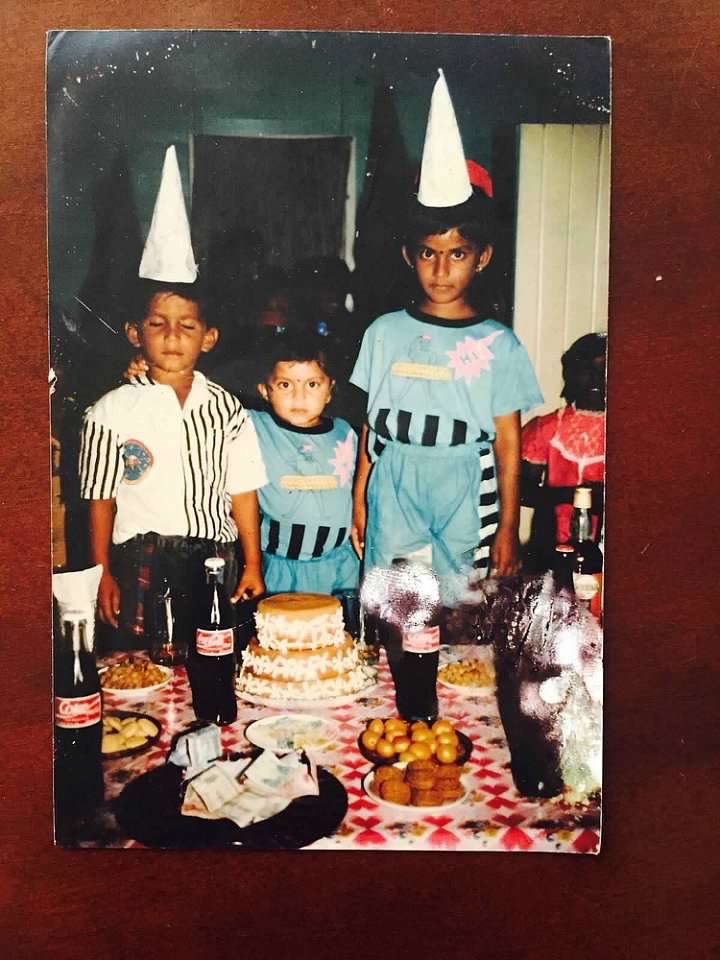
We may return to things we loved as children.
Writing.
Music.
Nature.
Dancing.
Teaching.
Reading.
Cooking.
Community.
Beauty.
The things that once seemed insignificant can suddenly become clues.
And perhaps this is why heartbreak can become such a powerful teacher.
It removes our ability to continue pretending.
It brings shame, grief, loneliness and longing to the surface.
But underneath those feelings may be something else:
a call to come home.
Not necessarily to another person.
To ourselves.
The Body Often Knows First
One of the things I have learned is that recognition doesn’t always begin as a thought.
Sometimes it begins as a sensation.
You encounter an image and something softens.
You hear a piece of music and your body becomes still.
You walk into a temple and feel something you cannot explain.
You see a particular landscape and suddenly feel at home.
You read a sentence and think:
There it is.
This is why I have become increasingly interested in the relationship between consciousness and the body.
The body participates in recognition.
Before we can articulate why something matters, we may already feel its significance.
This is especially important when we are reconnecting with lineage.
A chant you heard as a child may suddenly mean something completely different decades later.
A figurine you once walked past without understanding may suddenly become an object of contemplation.
A tradition you once considered ordinary may reveal an extraordinary depth.
The information didn’t necessarily change.
Your capacity to recognize it changed.
And this is one of the deepest principles of Sacred Economy:
Reality is not only something we encounter. It is something we participate in through what we are capable of recognizing.
The Archetype as a Bridge Between Lineage and Purpose
This is where archetypes become particularly interesting.
They can become bridges between belonging and purpose.
Because purpose is often treated as something we have to discover outside ourselves.
What career should I choose?
What business should I build?
What should I do with my life?
But perhaps purpose becomes clearer when we first establish a deeper relationship with belonging.
When I know that I belong, I don’t have to force purpose.
I can listen for it.
I can notice what repeatedly moves me.
I can notice what gives me energy.
I can notice what I naturally want to learn.
I can notice what I keep returning to.
I can notice what makes me feel alive.
I can notice what I want to offer.
And gradually, a pattern emerges.
Purpose is revealed through relationship.
Through our relationship with now.
With our bodies.
With our lineage.
With our environment.
With our attention.
With the people we encounter.
With the things that move us.
With the qualities of consciousness that keep asking to be expressed.
Purpose is not necessarily a destination.
It can be the quality of participation we bring to existence.
My Relationship With Saraswati
There is one story that has stayed particularly meaningful for me.
At one point in my life, when I was going through a major transition, I began thinking deeply about Saraswati.
She represents knowledge, wisdom, learning, music, communication and creative expression within the tradition I grew up with.
I had been feeling a strong pull toward writing, speaking, teaching and creating.
But there was still uncertainty.
So I asked for a symbol.
I said:
Show me a swan if this path is aligned with something deeper in me.
The swan has long been associated with Saraswati in the tradition I grew up with.
Not long afterward, I went to visit my aunt.
She lived near the water.
And there they were.
Two beautiful white swans.
I remember seeing them and feeling a sense of wonder.
Could I prove that this was a message from somewhere outside myself?
No.
And I don’t think I need to.
What mattered was what happened inside me.
I had been paying attention to a symbol.
Then life presented me with that symbol.
And something in me recognized it.
The experience gave shape to an inner knowing that had already been developing.
That is how I now understand synchronicity.
Not necessarily as reality handing us instructions.
But as life becoming meaningful through recognition.
What the Ancestors Leave Us
When we reconnect with lineage, something else can happen.
We begin to realize that we are not the first person to ask these questions.
Someone before us was also searching for beauty.
Someone before us was also trying to understand love.
Someone before us was also raising children.
Someone before us was also experiencing grief.
Someone before us was also wondering how to live well.
And they left clues.
Songs.
Recipes.
Rituals.
Stories.
Architecture.
Clothing.
Language.
Prayer.
Art.
Symbols.
Ways of gathering.
Ways of celebrating.
Ways of mourning.
Ways of remembering.
This is why lineage can create a profound sense of safety.
Not because our ancestors were perfect.
They weren’t.
But because remembering where we come from can interrupt the feeling that we have to invent ourselves alone.
We come from somewhere.
We carry something.
And we are also here to transform something.
Belonging does not mean repeating the past.
It means receiving what is alive within the inheritance and allowing it to evolve through us.
From Inheritance to Expression
This is where I think the deepest form of ancestral honoring happens.
Not simply by preserving everything exactly as it was.
But by allowing what was beautiful, wise and life-giving to continue taking new form.
A grandmother’s song becomes a daughter’s business.
A father’s craftsmanship becomes a son’s architecture.
A family tradition becomes a new form of art.
An ancient teaching becomes a contemporary practice.
A childhood fascination becomes a vocation.
A symbol becomes a creative language.
The inheritance moves.
It circulates.
It becomes something new without losing its essence.
This is creation from belonging.
You are not creating from a blank page.
You are creating from a field of relationship.
What Happens When We Stop Creating for Belonging?
Perhaps one of the greatest shifts in our lives occurs when we no longer need our creations to prove our worth.
We can create because something delights us.
We can speak because something wants to be said.
We can write because something wants to be understood.
We can teach because something wants to be shared.
We can build because something wants to exist.
We can love because love is already available within us.
This is where creativity becomes play again.
And perhaps this is why children can teach us so much about creation.
They don’t always ask:
Will this make me successful?
They simply play.
They experiment.
They make things.
They dance.
They sing the wrong lyrics.
They draw impossible houses.
They ask questions.
They become completely absorbed in what is happening now.
They participate.
And perhaps this is what we eventually return to.
Not childishness.
But playfulness without the burden of proving ourselves.
The Archetypes Were Never Asking Us to Become Someone Else
The deeper I go into this work, the more I think the archetypes were never really asking us to become someone else.
They were helping us remember.
Remember the courage that was already possible.
Remember the creativity that was already present.
Remember the wisdom that had not disappeared.
Remember the capacity for love.
Remember beauty.
Remember belonging.
Remember that we are multidimensional.
And perhaps this is why these symbols survived for thousands of years.
They carried something human across generations.
A language for qualities that cannot always be explained.
A way of giving attention a form.
A way of helping consciousness recognize itself.
A Practice of Belonging
So the next time you encounter a symbol that moves you, don’t rush past it.
Pause.
Notice.
Let yourself be curious.
You might ask:
What do I recognize here?
What quality of being is this symbol awakening in me?
What part of myself have I forgotten?
What did I love before I learned what I was supposed to become?
What keeps returning to my awareness?
What wants to be expressed through me now?
And perhaps most importantly:
What changes when I create from the knowing that I already belong?
You don’t have to force an answer.
Let the question live with you.
Let it become something you notice in your body.
In your dreams.
In your relationships.
In your work.
In your creative impulses.
In the symbols that keep appearing.
In the things that unexpectedly bring you alive.
Because sometimes the next chapter of your life does not arrive as a grand revelation.
Sometimes it arrives quietly.
As a sensation.
As a memory.
As a symbol.
As a longing.
As a strange little impulse that doesn’t make sense yet.
And your work is not necessarily to explain it immediately.
Your work may simply be to become receptive enough to recognize it.
You Were Never Starting From Nothing
Perhaps the greatest illusion is that we have to create ourselves from nothing.
We don’t.
We arrive carrying history.
Memory.
Culture.
Stories.
Sensations.
Imagination.
Longings.
Relationships.
Possibilities.
And beneath all of it is something even deeper:
the capacity to participate in existence itself.
Your ancestors may have given you symbols.
Your culture may have given you stories.
Your childhood may have given you images.
Your life may have given you wounds.
Your relationships may have given you mirrors.
Your crossroads may have given you space.
But none of these things ultimately define the whole of you.
They are invitations to remember.
And perhaps belonging is not the moment when the world finally says,
You are one of us.
Perhaps belonging is the moment when something inside you quietly says:
I was never outside.
From there, creation changes.
Purpose changes.
Relationships change.
Work changes.
Wealth changes.
Because you are no longer asking life to give you permission to exist.
You are participating.
You are allowing what is already within you to take form.
And this is the movement from belonging to embodiment.
From recognition to expression.
From inheritance to creation.
From asking Who am I supposed to become?
to asking:
What is already here, waiting to be lived?
Perhaps the archetype is simply the mirror.
Perhaps the lineage is the remembrance.
Perhaps belonging is the ground.
And perhaps your life is the place where all of it becomes new.
You are not here to become someone else.
You are here to remember what belongs within you—and give it permission to live.

